← Features · Prize for Experimental Video 2026 · In conversation
In conversation with
Sergey Shabohin
“I approach the slit as a queer strategy: a productive space between stable categories, where meanings shift, identities become unstable.”
Now in its third year, the FluxusMuseum Prize for Experimental Video gathers eleven artists and collectives from a field of over 600 international applications, works chosen for their resistance to easy categorisation, their originality, visual rigour, and an uncompromising approach to the form. Installed across the old marble factory by Parikia’s yacht harbour, the exhibition runs until the end of September, with prize winners announced in mid-September. Ahead of the announcement, we catch up with each of the eleven shortlisted artists and collectives.
Among this year's shortlisted artists is Sergey Shabohin, whose ongoing research project Atlas of Tectonic Landscapes traces how violence, displacement, memory, and historical transformation become visible through image, montage, and archive.
Could you describe your work featuring in the Prize, and how it sits in relation to your practice more broadly?
SS: Asymmetric Glossary is one of the central works within my ongoing research project Atlas of Tectonic Landscapes, which I have been developing since 2020 in response to the Belarusian Revolution, Russia's full-scale war against Ukraine, and the profound geopolitical ruptures that continue to reshape Eastern Europe. My research explores the tectonic structures through which violence, displacement, memory, desire, and historical transformation become visible. Today, this project forms the core of my artistic practice.
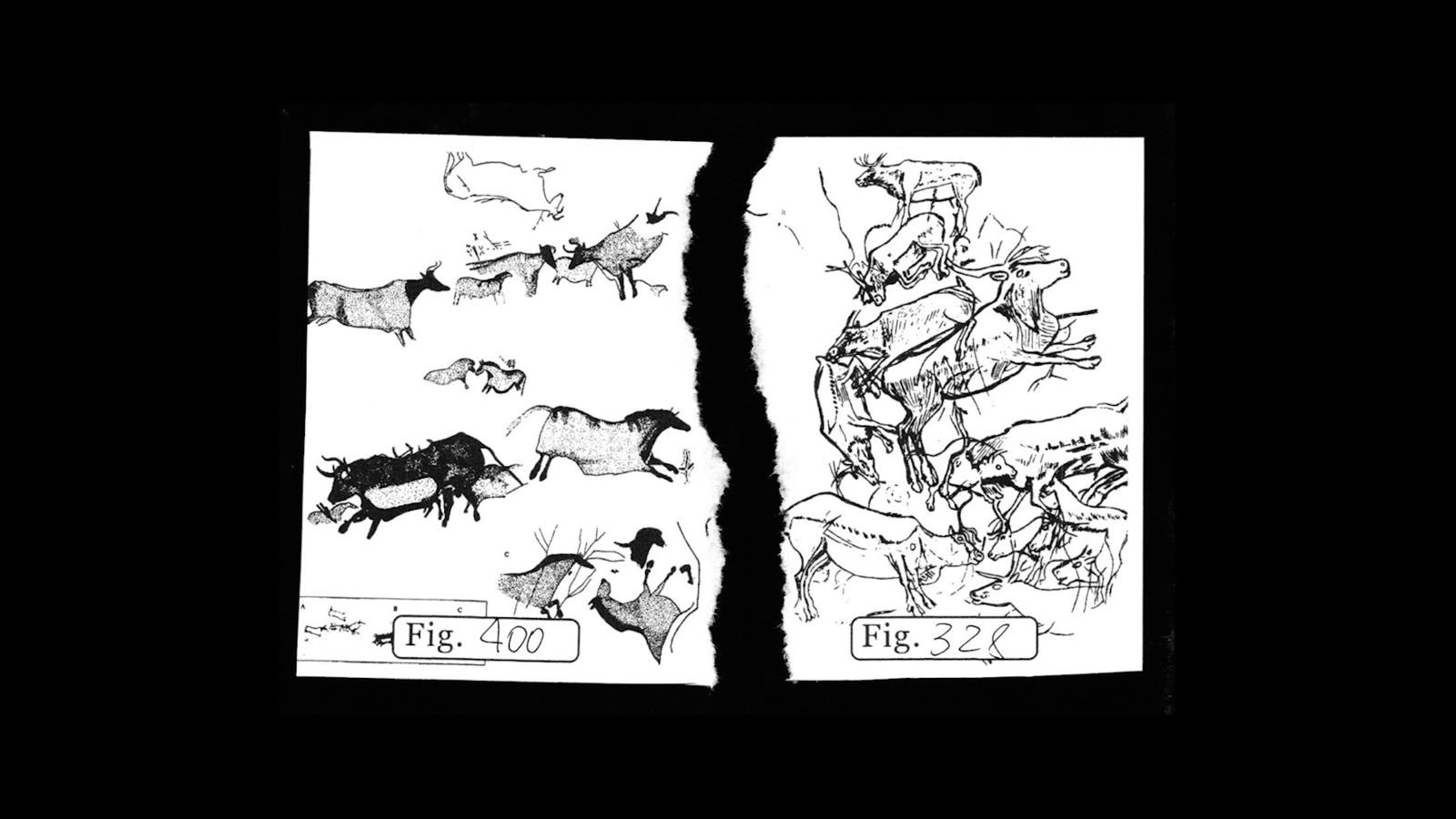
The work takes the form of a visual glossary composed of 288 carefully constructed image pairs. Each pair explores the tension between resemblance and difference, attraction and repulsion, continuity and rupture. The slit separating the images becomes the organising principle of the entire work. I approach the slit as a queer strategy: a productive space between stable categories, where meanings shift, identities become unstable, and seemingly incompatible realities enter into dialogue. It is a method of expansion, infiltration, and transformation.
The video moves through a wide range of imagery: geological faults, volcanoes, caves, shelters, scientific diagrams, optical devices, monuments, queer archives, bodies, military infrastructure, destroyed cities, political violence, acts of resistance, and my own artworks. Together, these materials form a dense conceptual structure in which every collision generates new meaning. The glossary demonstrates how the logic of the slit expands across multiple scales, from natural processes to architecture, from intimacy to war, from memory to counter-monumental practices, and from personal experience to collective history.
The title Asymmetric Glossary refers to the fundamental principle of the work. Each image pair initially appears almost symmetrical, yet an irreducible difference always remains between the two. For me, asymmetry is a productive condition that resists fixed narratives and stable identities. This is why I consider Asymmetric Glossary a programmatic work: it most fully articulates the methodology that defines my current practice: a counter-monumental queer strategy, working with the archive as a system of knowledge production, constructing visual glossaries, and using video editing, sound, and rhythm as tools of theoretical inquiry that transform the image into a mode of research and montage into a method of producing new concepts.
What is your relationship to the moving image as a medium; when did it enter your practice, and what does it let you do that other mediums don't?
SS: Moving image has never been simply one medium among others for me; it is a way of thinking. For many years I have been deeply engaged with cinema as a researcher and curator, I run a film club, make theatre projects, produce my own videos, and continuously reflect on the language of cinema. As a result, video entered my artistic practice quite organically, becoming the space where image, montage, sound, rhythm, text, and duration can operate together.
Video became increasingly important as my research shifted towards archives, memory, political violence, and systems of power. My practice is deeply rooted in specific historical, political, and spatial contexts, and moving image allows me to weave together documentary material, fictional structures, visual metaphors, sound, and atmosphere into a single conceptual framework. It offers a temporal dimension that enables meaning to unfold through duration, rhythm, and accumulation.
Montage is particularly important to me. I understand it not simply as an editing technique but as a method of producing knowledge. By placing images, sounds, and temporal intervals into carefully constructed relationships, montage generates meanings that cannot exist within a single image. Many of my video works therefore function as visual glossaries, where the sequence itself becomes a form of research rather than illustration.
Gallery-based video also differs fundamentally from cinema in the way it is experienced. The viewer can enter the work at any moment, so every fragment must function as an entry point while simultaneously contributing to a continuous conceptual flow. This creates a different kind of dramaturgy, one based less on narrative progression than on rhythm, repetition, density, and the gradual accumulation of associations. Asymmetric Glossary represents the most concentrated expression of this approach, where a relentless stream of images and an immersive sound composition produce an almost ritualistic experience, allowing meaning to emerge through collision, resonance, and repetition rather than through conventional storytelling.
Are there artists, filmmakers, or traditions outside of art you feel in dialogue with here?
SS: This work enters into dialogue with the tradition of politically engaged art, Situationism, and institutional critique, particularly the methodology of Hans Haacke, where the analysis of images and systems of organisation reveals the mechanisms of power, ideology, and the production of historical memory.
Another important genealogy for me is Fluxus and conceptual art of the 1960s and 1970s, with their use of the archive, the score, the instruction, the glossary, and systems of classification as artistic forms in their own right. This is also reflected in the deliberately monochrome visual language of Asymmetric Glossary, which draws on the aesthetics of encyclopaedias, scientific atlases, printed graphics, and archival documents. I also feel a strong affinity with Aby Warburg's methodology, where the juxtaposition of images becomes a mode of thinking and a way of producing knowledge.
These historical references intersect with Sergei Eisenstein's theory of montage and the visual culture of a later period: the rhythm of techno music, music videos of the 1990s and early 2000s, early computer graphics, internet art, and the accelerated perception of the digital age. I am interested in bringing these different temporalities and visual languages together within a single, densely structured visual system.
Some people use "experimental" to mean formally unconventional, others to mean something closer to research or inquiry. Which is closer to how you're using video here?
SS: I position myself somewhere between these two definitions. Research forms the foundation of my practice, yet research alone does not make a work experimental. Likewise, formal innovation has never been an end in itself for me. Contemporary art has already developed an extensive range of artistic languages, so I am more interested in identifying the one capable of addressing a particular question.
For me, experimentation begins when existing artistic tools prove insufficient and it becomes necessary to develop a new method. Asymmetric Glossary emerged precisely from this need. The work became an attempt to bring together the ideas, images, and principles that had gradually taken shape throughout my practice over the past several years. Every image, every pair, the rhythm, the sound, and the montage were carefully composed as elements of a single conceptual structure.
This is why I consider Asymmetric Glossary an experimental work. Through it, I developed a form that simultaneously systematises my artistic research and functions as an independent mode of inquiry in its own right. The video does not simply communicate ideas; it generates them. It transforms the glossary into a living system in which montage, rhythm, sound, and the collision of images become tools of thought, opening connections that could not be articulated through any other medium.
What would you like visitors to experience when spending time with your work?
SS: I would like the work to continue unfolding after the viewer has left the exhibition.
At first, it operates on an almost physiological level. The rhythm, sound composition, and high density of rapidly changing images create a state of intense concentration, almost trance-like. Contemporary viewers are accustomed to processing vast amounts of visual information in a very short time, and I wanted to use this ability by transforming it from a mechanism of rapid consumption into a tool for attentive observation.
Then another level of perception begins. I hope the viewer continues to notice ruptures, similarities, differences, and unexpected connections beyond the work itself. If, after experiencing the piece, someone becomes more attentive to the ways war and everyday life, memory and politics, personal experience and collective history intersect, and begins to recognise these relationships in the world around them, then the work continues to live and fulfil its purpose.
What has the support from FluxusMuseum made possible, for this piece specifically or for your practice more broadly?
SS: What I value most about participating in FluxusMuseum is that the work has been encountered within the very intellectual context from which it emerged. Asymmetric Glossary grew out of a long-standing engagement with Fluxus, conceptual art, archival practices, and experimental modes of knowledge production. For this reason, I see this exhibition not as an isolated opportunity but as a continuation of an ongoing dialogue. It also feels especially meaningful that this dialogue is taking place in Greece. The work contains references to ancient mythology and archetypal imagery, so this geographical and cultural context has unexpectedly become another layer of its interpretation.
Over the past few years, moving image has become an increasingly central part of my practice, and it is important to me that this aspect of my work has received institutional support from FluxusMuseum. I see this not as the conclusion of a project but as the beginning of a longer professional dialogue. I am particularly interested to see how this conversation might continue to develop together with FluxusMuseum.
What else are you working on at the moment?
SS: At the moment, I am primarily focused on a new theatre project, Glossary of Sirens, a solo performance that directly continues the ideas developed in Asymmetric Glossary. It is based on the testimony of a former Belarusian political prisoner reflecting on the protests, more than two years of imprisonment, and the attempt to reclaim his own voice. The glossary becomes the dramaturgical principle of the performance: throughout the piece, the actor's presence on stage is accompanied by a continuous flow of archival images, documents, concepts, and visual fragments, transforming the performance into a kind of hypertext. The premiere is scheduled for the end of this year.
Alongside this, I am developing several film scripts and continuing to expand my long-term cycles of work. I prefer to think in terms of interconnected cycles, where each work becomes part of a broader field of inquiry. I respond acutely to contemporary realities, different forms of injustice, and historical upheavals, constantly searching for the most precise artistic language through which to engage with them. Sometimes that language is video, sometimes theatre, publishing, exhibitions, research projects, or the work of my studio, online platform, and foundation.
Together, these activities form a single field of my present and future practice, allowing me to investigate memory, archives, human experience, and different forms of resistance through multiple artistic formats.

Sergey Shabohin is an artist, curator, and researcher working between Poland and Germany. His practice combines art, activism, and archiving, focusing on the intersections of visual culture, memory, and queer and post-migration perspectives.