“The moving image lets memory misbehave in public.”
Now in its third year, the FluxusMuseum Prize for Experimental Video gathers eleven artists and collectives from a field of over 600 international applications, works chosen for their resistance to easy categorisation, their originality, visual rigour, and an uncompromising approach to the form. Installed across the old marble factory by Parikia’s yacht harbour, the exhibition runs until the end of September, with prize winners announced in mid-September. Ahead of the announcement, we catch up with each of the eleven shortlisted artists and collectives.
Among this year's shortlisted artists is Paul Beaudoin, whose interdisciplinary practice moves between sound, image, text, and duration to work with damaged archives, queer memory, and forms that resist closure.
Could you describe your work featuring in the Prize, and how it sits in relation to your practice more broadly?
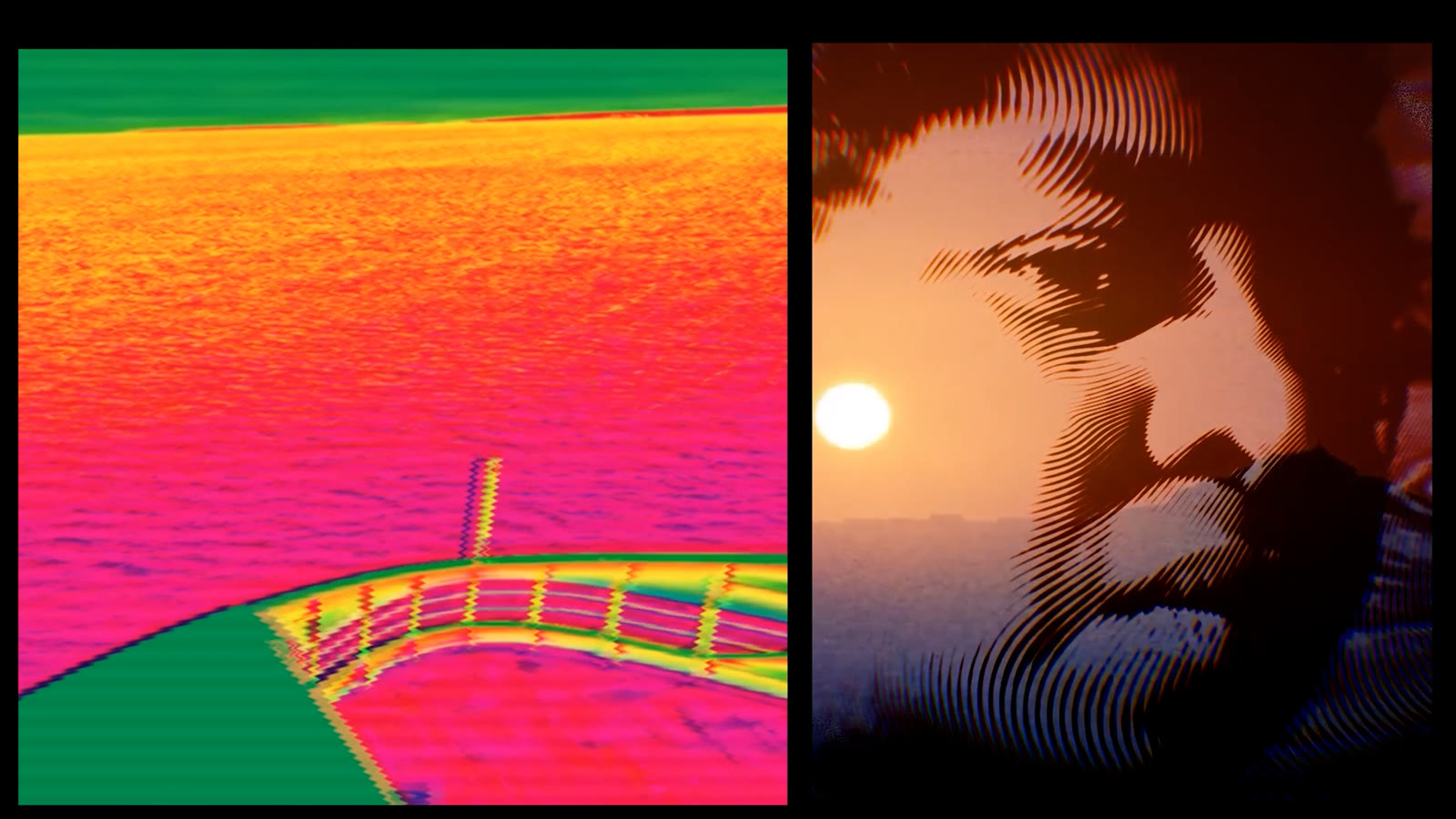
PB: My work in the Prize is Conditional Questioning: Six Visual Conditions, a looping video with sound.
It is built from six visual situations. Images divide, repeat, interrupt one another, and slowly begin to behave like unstable memories. There is no conventional narrative. Instead, the work asks what happens when fragments are placed under pressure and allowed to speak to each other.
That question runs through much of my practice. I work with sound, image, text, and duration, often through damaged archives, queer memory, partial histories, and forms that resist closure. I am interested in what remains perceptible when certainty has broken down.
What is your relationship to the moving image as a medium; when did it enter your practice, and what does it let you do that other mediums don't?
PB: The moving image entered my practice through sound.
I do not really think of video as separate from composing. I think of it as another way of organizing time, attention, silence, repetition, and interruption.
A still image can hold a wound. Sound can make time expand. Video lets both happen together. It allows an image to return changed, or to remain almost the same while our relationship to it shifts.
That is what interests me. The moving image lets memory misbehave in public.
Are there artists, filmmakers, or traditions outside of art you feel in dialogue with here?
PB: I feel close to experimental film, Fluxus, structural video, sound art, and archival practices that treat time as material.
But I am also interested in things outside art: damaged educational films, old instructional media, scientific diagrams, classification systems, computer language, ritual repetition, meditation, and the strange authority of systems that try to explain the world.
Those systems often fail at the human part. They can describe, sort, and preserve, but they do not know how to grieve. That failure is very present in the work.
Some people use "experimental" to mean formally unconventional, others to mean something closer to research or inquiry. Which is closer to how you're using video here?
PB: For me, experimental means inquiry. The form is unconventional, but that is not the point by itself. I am not interested in difficulty as a style. I am interested in setting up a condition and watching what it reveals.
What happens when two images are forced into relation? What happens when a screen divides? What happens when repetition starts to feel like memory, or like erasure?
This work does not illustrate an answer. It tests a way of looking.
What would you like visitors to experience when spending time with your work?
PB: I would like visitors to slow down.
The work does not need to be solved. It needs to be stayed with. At first, the images may feel separate or resistant. Over time, small connections begin to appear. A gesture returns. A rhythm forms. Something starts to feel remembered, even if it cannot be named.
I want visitors to feel that looking is not passive. It is intimate, unstable, and sometimes demanding.
What has the support from FluxusMuseum made possible, for this piece specifically or for your practice more broadly?
PB: FluxusMuseum has given the work a generous public context. That matters because this piece needs time. It does not behave like content. It asks for attention, duration, and a willingness to remain with ambiguity.
The support has also helped me understand moving image more clearly as a central part of my practice. I have always worked between disciplines, but this recognition gives the video work more space to stand on its own.
What else are you working on at the moment?
PB: I am working on several interdisciplinary projects using sound, image, and text.
One is Queer Olympus, an artist book that treats myth as an archive of queer memory, desire, loss, and digital reconstruction. I am trying to imagine how artificial intelligence might construct mythological portraits and narratives that survive in both code and human language.
I have also just completed say goodbye, Antinous, to Alexandria, a large electroacoustic work, and I am continuing to make video, photographic, and text based works that explore damaged images, unstable memory, and the persistence of bodies that history does not fully preserve.

Paul Beaudoin is an interdisciplinary artist living and working in Estonia.